Thread Rating:
  • 0 Vote(s) - 0 Average
  • 1
  • 2
  • 3
  • 4
  • 5
美國針對中國的政策方向 US Policy Against China
美中貿易戰波及 港媒:富士康已停止華為生產線
https://ec.ltn.com.tw/article/breakingnews/2810122

華教育部警告留學生 
美拒批簽證增
https://hk.news.appledaily.com/internati...4/20694928

美電機學會復允華為審稿
https://hk.news.appledaily.com/internati...4/20694930

快發5G牌 建黑名單 打稀土戰
華三招反擊 圖破美圍堵
https://hk.finance.appledaily.com/financ...4/20695296

美國欲致華為於死地,中央開始強勢反擊,中國商務部上周五宣佈將建立「不可靠實體名單」以牙還牙,昨日新華社再指工信部將於近期發放5G商用牌照,明撐華為。連同發改委較早前暗示可能對美國科技業禁運稀土,短短一周中央連出三招向美國反擊,亦是作出打貿易持久戰的準備。
記者:黃尹華

多位專家認為,雖然中央上述招數對美國企業有阻嚇力,但要需時才能生效,短期內港股仍無望扭轉跌勢。

港股經過「五窮月」累跌9.4%,踏入「六絕」,仍膠着於中美貿易戰況,首個交易日反覆低收7點,收26893點,恒指連跌第四日,成交金額維持827.2億元,國企指數收報10430點,彈0.42%,跑贏大市。

5G概念造好 鐵塔升4%

大市缺乏方向,藍籌股個別發展,騰訊(700)股價漲2.3%,收報333.6元,滙控(005)和友邦(1299)則分別跌1.2%和1.6%。午後新華社報道,工信部將於近期發出5G商用牌照,刺激相關5G概念股及中資電訊股午後急升,中移動(941)及聯通(762)分別升2.9%及1.7%,京信通信(2342)升10%,中國鐵塔(788)升4%。

荷蘭國際集團(ING)大中華經濟師彭藹嬈指,中央加快5G牌照發放,是撐華為舉動,但市場不用過度反應,「唔通唔做咩,如果現在唔發牌先得人驚。」她指市場更需要留意中央最近期的多項反制措施,已經是做好打持久戰準備,進入如習近平所言的「長征」,與以往寄望通過幾次談判解決問題的思路截然不同。

專家:港股短期難有轉機

彭藹嬈指,中國「不可靠實體清單」明顯是照抄美國「實體清單」,在周末又公佈白皮書,下一步或是學美國壠動「301調查」,甚至指美國是「貨幣操縱國」,跟足美國用過的招數。她表示,市場不能低估中國發動稀土戰威力,因會大幅增加美國科技企業的成本。這個過程曠日持久,會對美國企業造成很大傷害。

不過,她直言,美國企業要將壓力轉向特朗普,逼他在貿易戰收手,最快也要等美國民主黨總統選舉候選人確定以後,即在未來幾個月內,中美貿易戰和港股仍難有轉機。

中投傲揚精選基金基金經理溫鋼城指,中國版實體名單對谷歌和高通沒有阻嚇力,因如果不執行美國商務部指令,對其後果嚴重;但有助綑綁台積電這類取態不定的晶片公司,繼續向華為供貨,令危機不再惡化。但他不認為中央出手會帶來扭轉乾坤效果,特朗普已下決心打到底,短期內很難受到美企的影響。他認為在貿易戰前景不明朗情況下,港股6月或低見25600。

大摩警告:全球經濟恐衰退
https://hk.finance.appledaily.com/financ...4/20695298

摩根士丹利昨發表報告表示,根據該行一項美國經濟周期指標,已經由「擴張」步入「向下」,更是自2007年以來首次出現,反映經濟衰弱,步入熊市機會增大。

貿易戰增營商成本

該行首席經濟師Chetan Ahya表示,如果美國再次向額外的3,000億美元中國商品,加徵25%關稅,中國又同時實行反制措施的話,料全球經濟最快於9個月後步入衰退。

他認為,中美貿易戰雖然目前仍有不確定性,但料會拖累經濟發展,包括增加企業營商成本、削減資本開支、客戶需求放緩等。

他指出,美國經濟數據正在惡化,即使央行推出措施刺激經濟,但因滯後關係,仍難避免經濟萎縮。而周期指標轉跌的幾個月後,或會令股票回報下降及信貸收縮。該指標曾於2000年10月至2001年9月、2006年12月至2007年11月出現轉向,其後的數個月內均步入熊市。

高盛亦看淡前景,該行經濟學家Jan Hatzius預計,美國對墨西哥徵收關稅同時,亦將對3,000億美元的中國進口產品徵收關稅。因此該行對美國下半年增長預測,下調半個百分點至2%,又認為聯儲局減息機會增加。

Webb:美或逼基金掟中資股債
https://hk.finance.appledaily.com/financ...4/20695300

面對美國在貿易戰步步進逼,中國目前同樣以加徵關稅作為回應,擺出一幅無懼加稅的姿態。

涉資數千億美元

獨立股評人David Webb(圖)日前指出,美國之後可能在資本賬出手,要求美資基金撤離對中資企業的股、債投資,屆時中國或面臨規模數以千億美元計的走資潮。

Webb指出,美國的退休公積金、互惠基金和401(k)退休儲蓄計劃等,向在美、中和香港上市的中資機構證券,投入了數以千億美元計的資金,許多跨國資產管理機構又是以美國為基地,包括貝萊德和富達等,這類基本還替其他國家的市民管理資產。Webb續稱,當關稅對中國無甚威嚇作用,他不會對美國總統特朗普,轉移在資本市場制裁中國感到驚訝,這局面甚至會在短期內發生。

美國曾在去年4月對俄鋁身上(486)試用這招。Webb表示,美國財政部海外資產控制辦公室(OFAC)當時下達指令,要美國人士中止與俄鋁的合作關係,俄鋁股價在同期出現急瀉。

Webb猜測,一旦OFAC對中資企業行動,第一步會封殺中央控股公司,涉及內地銀行、石油,以及石化行業,之後會追殺不同行業公司,理由是許多中資公司在公司章程中列明設立共產黨委員會。

[ 本帖最後由 U52.5U4G 於 2019-6-3 16:04 編輯 ]
Reply
美續打壓華科企 小米也中招
股價跌至新低
https://hk.finance.appledaily.com/financ...5/20695964
[Image: b0101a.gif]

美國科技戰戰線不斷蔓延,繼華為被封殺後,內地另一家手機巨頭小米(1810)亦首次被捲入戰火。有美國國會議員公開表示,小米侵犯消費者隱私和構成國家安全風險。有分析師指,事件顯示美國正打壓中國科技發展,如日後技術稍微高一點的上市科技公司,都有機會被美國制裁,對科技板塊將不利。
記者:黃尹華 梁延宇

小米昨日再斥資9,999.8萬元回購1,100萬股,回購價每股8.96至9.02元。小米前日已斥資9,980.72萬元回購1,102.94萬股,而對上一次回購是在今年1月。小米連續兩日回購未能挽回市場信心,股價昨再跌0.77%,收報9.02元,為去年7月上市以來新低,至今已較招股價跌47%。

美國共和黨參議員凱西迪(Bill Cassidy)前日(6月3日)發表聲明,敦促華府關注中國可能利用可穿戴設備,讀取包括地理定位、電子支付、公共交通系統、社交媒體等敏感數據。

被指構成國家安全風險

凱西迪點名批評華為及小米通過低利潤率銷售設備,快速擴大用戶群以便積累用戶數據,削弱美國公司在市場上的競爭力。中國打算在全球範圍內發展幾家大型國有企業,然後用它來實現其國家目標。在與中國政府密切相關的公司手中,這些資訊甚至可能對美國國家安全,以及公民的私隱造成嚴重影響。

高技術科企 恐被美制裁

美國過往打壓中國科技公司,亦是先由國會發起。在2012年,美國國會啟動對華為和中興的調查,指其對美國國家安全構成威脅,為之後美國政府的制裁行動鋪路。

目前,全球十大手機品牌中,中國手機佔其中六席,當中只有進行自主研發晶片的華為和小米被美國針對。小米在2014年成立了專注晶片研發的松果電子,並推出國產晶片澎湃S1。在華為被美國封殺後,小米董事長雷軍更宣佈,將在小米行車記錄儀上使用華為的海思晶片,以撐國產晶片。

易方資本高級分析師關博文表示,現時香港上市公司亦有晶片設計、技術稍微高一點的科技公司,這些受到美國制裁的機會都會較高。但他指穿戴設備不是核心技術,照道理說不會像華為般制裁,但預料日後這些產品應該是無法在美國銷售。

中國泛海證券投資策略聯席董事阮子曦指,近日市場充斥負面情緒,加上早前股權消息,對股價有一定影響。「美國仲有絕招係高通(晶片商)唔畀貨,同埋安卓(Android)唔再合作,但現階段未必會咁快行到呢一步。」他以聯想(992)為例,指即使近日沒有涉及貿易戰消息,股價都輾轉下跌,「關於手機、穿戴設備嘅新聞都會瓜田李下」。
Reply
中國海外央視 被美撤銷國會記者證
https://news.ltn.com.tw/news/world/paper/1293301

挑戰中國! 川普政府將台灣列入「國家」名單
https://news.ltn.com.tw/news/politics/br...ws/2814951
[Image: 600_phpT35NA1.jpg]
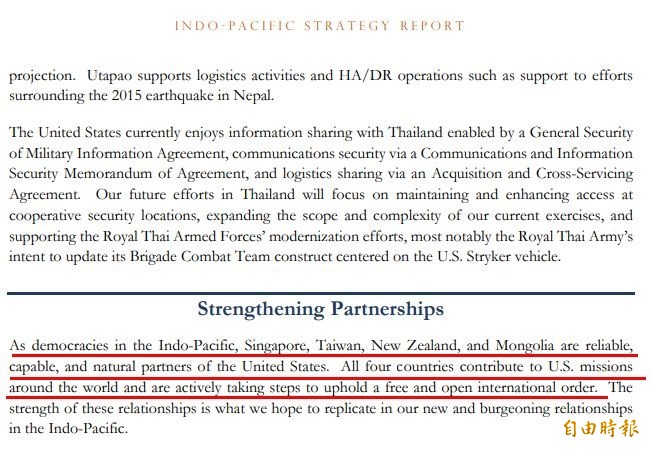
美國國防部上週六公布的印太戰略報告中指出,美國致力增強與印太地區民主國家的夥伴關係,其中提到新加坡、台灣、紐西蘭和蒙古等4個「國家」。(圖擷取自美國國防部印太報告)

美國國防部上週六(1日)公布55頁的印太戰略報告,外媒發現川普政府在這份國防報告中,將台灣列入「國家」名單,此舉為美國一系列對台灣的表態行動,疑似要引起中國注意,挑戰長期以來的中國主張的「一中原則」(one-China principle)。

《南華早報》報導,美國國防部的印太戰略報告中指出,美國致力增強與印太地區民主國家的夥伴關係,其中提到新加坡、台灣、紐西蘭和蒙古等4個「國家」。文中顯示,「作為印太地區的民主國家,新加坡、台灣、紐西蘭和蒙古是美國的可靠、有能力和自然的合作夥伴。這4個『國家』都為美國在世界各地的使命做出貢獻,並正在積極採取措施維護自由開放的國際秩序。我們希望這些力量延續和發展在印太地區。」

報導提到,美國國防部沒有回應為何將台灣列為「國家」,但美國國防部印太事務助理部長薛瑞福6日說,台灣受到北京的威脅愈來愈大,美國非常重視「台灣關係法」的義務。

分析人士表示,「國家」的使用為川普政府的最新行動,因為美國和中國在貿易、安全、教育、簽證、技術和「文化」上存在重大分歧,過去美國官方文件提到台灣為國家,往往是美國官員在報告中的用詞錯誤。

美國國家部門和國家安全委員會也沒有回應為何在文件中將台灣列為「國家」,5月的美國國防部關於中國的報告中,尚未使用「國家」稱呼台灣。分析人士說,有幾個因素促使川普推動對台政策,其中包括對台灣主權的強烈信念,以及強大的美台關係,華府需要反擊北京對台灣日益增長的軍事和外交壓力,以及在其他方面獲得更多對中國的影響力。

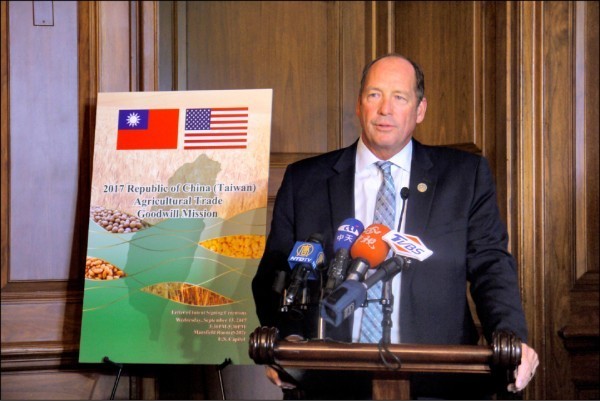
美國共和黨眾議院外交委員會亞太小組主席游賀(Ted Yoho)6日稱讚國防部將台灣視為國家,他表示,台灣應該得到適當的承認,台灣是一個獨立的國家,中國必須承認這一點。

瑞典《尼瑞克日報》承認台灣是國家 不甩中國抗議
https://news.ltn.com.tw/news/world/breakingnews/2799210
[Image: 600_php4mI1SE.jpg]
《尼瑞克日報》15日發表一篇社論,提及台灣未能參加世界衛生大會(WHA)一事,文中讚台灣是民主國家,並譴責中共的極權專制和霸權主義。(圖擷自Nerikes Allehanda)

瑞典首屈一指的報社《尼瑞克日報》(Nerikes Allehanda),上週在社論中承認「台灣為國家」,引發中國抗議並要求該報必須「修正錯誤」,不過該報表示絕對不會更改文章內容,並指中方的要求「很奇怪」、審查的長手已伸到一個民主自由國家的新聞媒體面前。

譴責中共的極權專制和霸權主義
《尼瑞克日報》15日發表一篇社論,提及台灣未能參加世界衛生大會(WHA)一事,文中讚台灣是民主國家,並譴責中共的極權專制和霸權主義,中國駐瑞典大使館為此提出抗議,要求該報必須「修正錯誤」,並須刊登中國的回應內容,不過該報拒絕這項要求。

該報的總編輯尼爾森(Anders Nilsson)強調,絕不會修改有關台灣的內容,並指像中國這樣專制的國家,會有這樣的行為「不意外」,因為專制極權國家的所作所為就是如此。尼爾森也直言「中國的審查長手已經伸向國外,伸到一個民主自由國家的新聞媒體面前。」

「台灣是一個國家!」美議員:是時候承認這個事實了
https://news.ltn.com.tw/news/politics/br...ws/2639803
[Image: 600_phpowIyU1.jpg]
游賀(見圖)認為,「台灣是一個國家,是時候接受並認清這一事實」。(中央社,資料照)

美國共和黨眾議院外交委員會亞太小組主席游賀(Ted Yoho)昨天認為,美國政府若一再配合共產黨,就是對台灣被邊緣化做出貢獻,他強調,「台灣是一個國家,是時候接受並認清這一事實」。

游賀昨在《台北時報》刊出「承認台灣是個國家」(Recognize Taiwan as the country it truly is)的社論,其中提到美中談判時,不應再接受中方的條件,因為如果美方同意台灣在某種程度上是雙方對談的「禁區」的錯誤論述,美國無形中就接受了中共所主張台灣地位是國內問題的謊言,進而導致台灣被邊緣化。

他強調,「現在是美國、中國和世界其他國家應公平對待台灣的時候了。」台灣以一個主權國家的形式存在,透過人民賦權、民主制度、對個人自由和人權的管理獲得這樣的狀態,且事實是不言可喻的,中共的獨裁政府從未統治過台灣。

他也提到,過去在共和、民主兩黨高度共識之下,美國國會以壓倒性多數投票通過了「台灣關係法」,保護台灣不受侵略,並保護台灣事實上的主權,建立一個非官方的近40年盟友關係。中共試圖掩蓋此事實,因為台灣的存在是對中國執政的威脅。

游賀強調,2019年是「台灣關係法」40週年,美國在這個時間點,應該更新對台政策,使其符合當前現實情況,這將會是台、美新關係一個很好的開始,台灣是一個國家,是時候接受並承認此一現實。

號召聲援「在台灣的自由中國」 瑞典媒體又戳強國玻璃心!
https://news.ltn.com.tw/news/politics/br...ws/2612393

台灣被改為「中國一省」 外交部要求瑞典稅務局更正
https://news.ltn.com.tw/news/politics/br...ws/2355167

[ 本帖最後由 U52.5U4G 於 2019-6-6 22:09 編輯 ]
Reply
美眾院外委會嗆中︰美一中政策≠中國的一中原則
https://news.ltn.com.tw/news/politics/paper/1288750

美國眾議院外委會昨直嗆中國外交部指出,「搞清楚點吧,美國的一中政策不等於中國的一中原則」;並重申美國國會四十年來支持台灣始終如一,台灣是民主夥伴,改變現狀的是北京。

美國眾議院上週以一致同意方式通過「台灣保證法」;「台灣保證法」要求美國對台軍售常態化、重啟台美貿易協定會談、支持台灣國際參與及檢視對台交往準則等,再次顯示國會跨黨派挺台態度明確。

「台灣保證法」在眾院通過後,中國外交部發言人耿爽在記者會上直嗆美方行為「嚴重違反一中原則、中美三公報以及大肆干預中國內政」,並表示已提出嚴正交涉。

駁斥對台保法批評 挺台不會改變
美國眾議院外交委員會則於美東時間十三日,在推特上轉發中國官媒「環球時報」關於中國外交部反對的報導,並做出嗆辣評論。眾院外委會官網平時亦會轉載推特內容,因此外委會此次關於美國一中政策的發言,也同步公開在官網上。

眾院外委會針對中國抗議回應說,中國外交部指眾院外委會主席恩格爾和首席議員麥考爾提出的「台灣保證法」違反一中,但「搞清楚點吧,美國的一中政策不等於中華人民共和國的一中原則」。

台是民主夥伴 改變現狀的是北京
外委會重申,美國國會已支持台灣長達數十載,並將繼續貫徹「六項保證」,履行「台灣關係法」承諾。外委會強調,美國國會四十年來始終如一,「台灣及其二千三百萬居民是我們的民主夥伴,我們對此作出了嚴肅的承諾。改變現狀的是北京對台灣與日俱增的壓力和破壞台灣民主的企圖」。

美國政府歷來均以「美國的一中政策」表達立場,並定義為「基於美中三公報和台灣關係法」的政策。

川普政府上台後,美方「一中政策」的內涵則漸漸加上「對台六項保證」,若再與近年通過的「台灣旅行法」與尚待參院審議的「台灣保證法」,美對台承諾則可望升級為「三法六保證」。但對北京而言,「一中原則」僅有三公報,連「台灣關係法」都不承認。
Reply
美國據報推動取消中國在世貿發展中國家地位
https://news.rthk.hk/rthk/ch/component/k...190607.htm

《美國之音》報道,美國眾議院外交委員會亞太小組委員會主席約霍表示,國會和政府正努力推動取消中國在世界貿易組織的發展中國家地位。

報道說,在一個智庫舉行的中國問題研討會上,約霍提到國會已經與國務卿蓬佩奧進行討論。

約霍認為,中國已經是世界第二大經濟體,建造了五艘航空母艦,透過「一帶一路」倡議在全球投資,而且還有太空計劃,質疑怎可能是發展中國家。

總統特朗普曾多次批評世貿繼續將中國列為發展中國家,更揚言如果世貿改革沒有取得進展,並更公平地對待美國,威脅退出。

中國一直堅稱,雖然是全球第二大經濟體,但按人均生產總值、教育水平等標準,中國應該被視為發展中國家。

[ 本帖最後由 U52.5U4G 於 2019-6-7 00:17 編輯 ]
Reply
强烈建议一读!新加坡总理李显龙讲中美关系(中英全文)
http://news.ifeng.com/c/7nAhGNf5576

Dr John Chipman, Director-General and Chief Executive, IISS

Your Excellencies

Distinguished guests, ladies and gentlemen,

Good evening

1. Welcome to Singapore and to the 18th edition of the Shangri-La Dialogue.

The view from Singapore and Southeast Asia

2. Our world is at a turning point. Globalisation is under siege. Tensions between the US and China are growing. Likeeveryone else, we in Singapore are anxious. We wonder what the future holds, and how countries can collectively find a way forward to maintain peace and prosperity in the world.

3. What can the history of Southeast Asia tell us about avoidingupheavals and disasters in our path ahead?

(因篇幅原因,此处省略)

US-China relations

11. I recount this history to show that Southeast Asia is no stranger to the great game of nations, and to offer some historical perspective to the current strategic situation. The US-China bilateral relationship is the most important in the world today. How the two work out their tensions and frictions will define the international environment for many years to come.

12. The relationship has already altered significantly. China has totally changed since it started opening up forty years ago. Its GDP per capita has grown by more than 25 times in real terms. China is now the second largest economy in the world.

13. On many counts, China’s growth is a tremendous boon, both for itself and the world. China has substantially transformed its backward, centrallyplanned economy into a middle-income, market-driven one, even though it is far from being a full market economy. More than 850 million Chinese people have been lifted out of poverty, an achievement unprecedented in human history.

14. China’s development and success has benefited the world too. China has become a massive production and manufacturing base, lowering costs for the world’s producers, first for labour-intensive goods, and now increasingly for high value and technology-intensive production. It is also a huge market, importing everything from commodities and electronic components to aircraft and fine wines. On the consumer side, billions of people worldwide buy all manner of products, from Barbie dolls and basketballs to drones and mobile phones, made in China, though often incorporating foreign components and technology.

15. Imagine, conversely, that China had remained closed and undeveloped. A failing China would have exported many problems to the world, quite possibly still including armed revolution. Its huge population would have been resentful and restless at being left behind by other countries. A generation ago, when China was still poor, Deng Xiaoping was asked by US President Jimmy Carter to allow more people to emigrate. He answered: “Well, Mr President, how many Chinese nationals do you want? Ten million? Twenty million? Thirty million?”

16. China’s success has enabled the world to avoid this disastrous outcome. At the same time, China’s growth has shifted the strategic balance and the economic centre of gravity of the world, and the shift continues.

17. Both China and the rest of the world have to adapt to this new reality. China has to recognize that it is in a totally new situation created by its own success. China can no longer expect to be treated the same way as in the past when it was much smaller and weaker. China may still be decades away from becoming a fully developed advanced country, but it cannot wait decades before taking on larger responsibilities.

18. Having gained much from the international system, China now has a substantial stake in upholding it, and making the system work for the global community. Chinese leaders have spoken up strongly in support of globalisation and a rules-based international order. China must now convince other countries through its actions that it does not take a transactional and mercantilist approach, but rather an enlightened and inclusive view of its long term interests.

19. For example, when China joined the WTO in 2001, its merchandise trade accounted for only 4.0% of world trade. Since then China’s share has almost tripled, to 11.8%. This is why the trade arrangements and concessions that China negotiated when it joined the WTO are no longer politically wearable for other countries. It is in China’s own interest to prevent the international framework of trade from breaking down, and to implement timely changes that bring about greater reciprocity and parity with its trading partners, and that are more consistent with present day China’s more advanced state of development.

20. Similarly, in security, now that China is a major power with the second largest defence budget in the world, its words and actions are seen differently. To protect its territories and trade routes, it is natural that China would want to develop modern and capable armed forces, and aspire to become not just a continental but also a maritime power. At the same time, to grow its international influence beyond hard power, China needs to wield this strength with restraint and legitimacy.

21. Frictions will arise between China and other countries from time to time. The overlapping maritime claims in the South China Sea are an example. China should resolve these disputes peacefully, in accordance with international law, including UNCLOS. It should do so through diplomacy and compromise rather than force or the threat of force, while giving weight to the core interests and rights of other countries. Then over time it will build its reputation as a responsible and benevolent power that need not be feared. Instead China will be respected as a power that can be relied on to support a stable and peaceful region. In the long term, this will allow China to continue to benefit from a conducive and friendly international environment, and enhance its influence and standing in the world.

22. The rest of the world too has to adjust to a larger role for China. Countries have to accept that China will continue to grow and strengthen, and that it is neither possible nor wise for them to prevent this from happening. China will have its own legitimate interests and aspirations, including to develop indigenously advanced technologies like infocomms and artificial intelligence. As a major stakeholder in the international system, China should be encouraged to play commensurate and constructive roles in supranational institutions like the IMF, World Bank, and WTO. If China cannot do so, it will create its own alternatives.

23. The US, being the preeminent power, has the most difficult adjustment to make. But however difficult the task, it is well worth the US forging a new understanding that will integrate China’s aspirations within the current system of rules and norms. New international rules need to be made in many areas, including trade and intellectual property, cybersecurity and social media. China will expect a say in this process, because it sees the present rules as having been created in the past without its participation. This is a reasonable expectation.

24. The bottomline is that the US and China need to work together, and with other countries too, to bring the global system up to date, and to not upend the system. To succeed in this, each must understand the other’s point of view, and reconcile each other’s interests.

25. Meanwhile, stresses and strains have built up between the two over multiple issues including cyber-espionage, 5G technology, freedom of navigation, human rights, and especially trade, where the two countries have reached an impasse.

26. If both sides treat their trade dispute purely on its own merits, I have no doubt their trade negotiators will be able to resolve it. But if either side uses trade rules to keep the other down, or one side comes to the conclusion that the other is trying to do this, then the dispute will not be resolved, and the consequences will be far graver than a loss of GDP. The broader bilateral relationship will be contaminated. Other areas will inevitably be affected, including investments, technology, and people-topeople relations. Every action taken by one side will be seen as a direct challenge to the other, and will elicit a counter-action. We will all be headed

for a more divided and troubled world.

Hardening of attitudes in the US and China

27. Worryingly, this is starting to happen. Attitudes on both sides have been hardening. The US National Security Strategy and National Defense Strategy documents describe China as a “revisionist power” and America’s“strategic competitor”. The recent Presidential Executive Order on securing the information and communications technology and services supply chain, states that it is aimed at “foreign adversaries”. It stopped just short of naming any specific country, but made quite clear what actions the US intends to take.

28. There is a growing bipartisan consensus in the US: that China has taken advantage of the US for far too long; that China has overtaken, or will soon overtake, the US in areas of advanced technology, such as artificial intelligence and some aspects of military technology, through underhand means; that instead of opening up and becoming more like the US, China has regressed in terms of political openness, and hence represents a challenge to American values and leadership.

29. Americans now talk openly of containing China, and to do so soon before it is too late, the way they used to talk about the USSR and the Soviet bloc. This negative view of China has permeated the US establishment. It is not confined to the White House or the Administration, but is shared widely by Congress, the military, the media, academics and NGOs too. Those inclined to a more positive view of China have been marginalised.

30. Even US business sentiment towards China has soured. American businesses used to be the strongest supporters of China, because they benefited directly from China’s growth and economic opportunities. They had strongly advocated China’s accession to the WTO. When protectionist or nativist sentiments built up in the US, they were a balancing voice that counselled good relations with China.

31. Now, that goodwill has all but evaporated. US businesses feel let down that China has not adjusted its policies on trade and investments, and in fact systematically disadvantages foreign businesses operating in China, while Chinese businesses operate uninhibited in the US. They want greater access to the China market, and not just to use China for their global supply chains. Many European businesses feel the same. This loss of goodwill on the part of an important constituency is a serious problem for China, which the Chinese have not fully appreciated or dealt with.

32. In China, views are hardening too. There are those who see the US as trying to thwart China’s legitimate ambitions – convinced that no matter what they do or concede on individual issues, the US will never be satisfied. They are alarmed by talk of a “clash of civilisations” between the US and China. They reject what they see as efforts by the US to impose its political system and values on China.

33. This is coupled with a strong vein of nationalist fervour. Chinese television is rebroadcasting old movies of the Korean War, known in Chinese as抗美援朝战争– the war to resist America and assist North Korea. There is even a “US trade war song” circulating on the internet, based on a musical track from a popular 1960s war movie about fighting the Japanese in the Sino-Japanese War! Hardly anyone in China, whether in government, academia or the media, can be found who is prepared to speak up for a more positive and benign interpretation of the US’ intent.

34. The fundamental problem between the US and China is a mutual lack of strategic trust. This bodes ill for any compromise or peaceful accommodation. But to go down the present path would be a serious mistake on both sides. There is no strategic inevitability about a US-China face-off. But at the same time, if such a face-off does happen, it will be nothing like the Cold War.

35. First, there is no irreconcilable ideological divide between the US and China. China may be communist in political structure, but it has adopted market principles in many areas. The Soviets sought to overturn the world order. But China has benefited from, and by and large worked within, the framework of existing multilateral institutions. During the Cold War, the Communist bloc sought to export Communism to the world. But China today is not attempting to turn other countries Communist. Indeed, it is often criticised for being too willing to do business with countries and leaders regardless of their reputation or standing, citing non-interference in the internal affairs of other countries.
Reply
36. Second, China has extensive economic and trade links with the rest of the world. It is a major node in the world economy, unlike the USSR, whose economic links outside the Soviet bloc were negligible. In fact, all of the US’ allies in Asia, including Japan, South Korea, the Philippines, Thailand and Australia, as well as many of its friends and partners, including Singapore, have China as their largest trading partner. They all hope that the US and China will resolve their differences. They want to be friends with both: to nurture security and economic ties with the US, as they grow their business links with China. In a new Cold War, there can be no clear division between friend and foe. Nor is it possible to create NATO or Warsaw Pact equivalents with a hard line drawn through Asia, or down the middle of the Pacific Ocean.

37. On the other hand, if there is indeed a conflict between the US and China, where will it end? The Cold War ended with the total collapse of the sclerotic planned economies of the Soviet Union and its allies, under the pressure of enormous defence spending. Even then, it took 40 years. It is highly improbable that the vigorous Chinese economy will collapse in the same way.

38. China cannot take down the US either. The US is still by far the strongest country in the world. Its economy remains the most innovative and powerful, and its military capabilities and spending far exceed China’s. Americans worry about China catching up with the US, but although China may be ahead in some fields, it will be many years before China can equal the US. And contrary to what some people in China think, the US is not a declining power, nor is it withdrawing from the world. In fact, the US has made clear its intention to compete robustly, though in a different mode than before.

39. Even short of outright conflict, a prolonged period of tension and uncertainty will be extremely damaging. Many serious international problems like the Korean situation, nuclear non-proliferation, and climate change cannot be tackled without the full participation of the US and China, together with other countries. In economic terms the loss will be not just a percentage point or two of world GDP, but the huge benefits of globalised markets and production chains, and the sharing of knowledge and breakthroughs that enable all countries to progress faster together.

40. We should therefore do our utmost to avoid going down the path of conflict, and causing enmity on both sides that will last for generations. Of course, it is the duty of security and defence establishments to think the unthinkable, and plan for worst case scenarios. But it is the responsibility of political leaders to find solutions to head off these extreme outcomes.

41. This is hard, because leaders on both sides are facing powerful domestic pressures. In the US, the political mood is deeply divided and disgruntled. Large segments of American society have lost confidence in globalisation and multilateralism. According to a Pew survey last year, nearly half of all Americans have an unfavourable opinion of China. As the presidential elections approach, these attitudes will surely deepen, because neither the Republicans nor the Democrats will want to risk being accused of being ‘soft’ on China. Regardless whether President Trump is re-elected, or another Republican or Democrat wins, these sentiments will not go away.

42. China may not have US-style presidential elections, but their leaders face strong internal pressures too. In fact, the orientation of the Chinese leadership is primarily domestic. They know they have major issues to deal with at home. These include unevenly distributed growth, significant rural

poverty, an aging population, and rising expectations for a better quality of life.

43. Both sides are sensitive about being perceived as weak. Out of political necessity, the US wants to show that it has come out ahead in any deal. On the other side, because of China’s long history with the West, its leaders cannot afford to appear to succumb to Western pressure to accept an “unequal” treaty. Just a few weeks ago, China commemorated the centennial of the May 4 movement. In 1919, at the Versailles Peace Conference, a feeble China was forced to accept the decisions of the big powers. This caused Peking University students to demonstrate in protest, launching a nationalist movement to modernise and revive the country. This was a seminal moment in modern Chinese history.

44. This zero-sum dynamic makes it very hard to construct an agreement that is politically acceptable to both parties. But ultimately it is in the interests of both the US and China to reach such an accommodation, and to persuade their domestic publics to accept it. They both need to keep theirrelationship steady, so that both can focus on their respective pressing domestic priorities, and not be distracted by troubled relations with the other.

Multilateralism

45. What can other countries do collectively, to stem the growing hostility and instability? Small states like Singapore can do little to influence the big powers, but we are not entirely without agency.

46. There are many opportunities for smaller countries to work together to deepen economic cooperation, strengthen regional integration, and build up multilateral institutions. This way, we can strengthen our influence as a group, and advance a collective position on issues that matter to us, be it trade, security or technology.

47. Our multilateral institutions today are far from perfect. The WTO is one of the major institutions in the post-war global order, but now it is almost paralysed, and urgently needs reform. Multilateral global deals like the Uruguay Round are no longer practical, when agreement requires a full consensus among 164 member countries of hugely diverse interests and philosophies. Furthermore, the WTO was designed for an agricultural and manufacturing-based world economy, but the world has moved on to services and now increasingly digital and intellectual property, which need much more complicated rules.

48. The US has lost faith in the WTO. It often acts unilaterally, imposing tariffs and trade sanctions outside WTO rules. It prefers negotiating bilateral deals one on one against smaller countries in tests of strength. It gives more weight to the US’ direct benefits in the disputes at hand, than to its broader interests in upholding the multilateral system. This has caused concern to many of the US’ friends and allies.

49. Singapore cannot afford to adopt the same point of view. Being small, we are naturally disadvantaged in bilateral negotiations. We need to reform and strengthen multilateral institutions, not cripple or block them. More fundamentally, confining ourselves to a bilateral approach means forgoing win-win opportunities which come from countries working together with more partners. We need to build a broader regional if not global architecture of cooperation. When groups of countries deepen their economic cooperation, they will enhance not just their shared prosperity but also their collective security. With more stake in one another’s success, they will have greater incentive to uphold a conducive and peaceful international order. This will benefit many countries big and small.

50. Thus, short of universal trade agreements, we should at least strive for regional or pluri-lateral arrangements. This may be a second best solution, but it is a practical way to incrementally build support for lower trade barriers and higher standards, which can then be adopted by other countries.

51. This was the rationale behind the Trans-Pacific Partnership (TPP). The US originally came on board the TPP because it saw the strategic benefits, although it ultimately withdrew. Fortunately, the remaining 11 members were able to preserve nearly all that had been negotiated, and so the Comprehensive and Progressive Agreement for Trans-Pacific Partnership (CPTPP) is now in force.

52. I am glad that more countries have expressed interest to join the CPTPP, including South Korea, Thailand and the UK. China is also watching the CPTPP carefully. They are not ready to join now, but I hope that they will seriously consider doing so sometime in the future. Similarly, I hope one day it will become politically possible for a US administration to rethink the US’ position, and recognise that it stands to gain, economically and strategically, from becoming a member of the partnership that it played a leading role in designing.

53. Meanwhile, countries in the Asia Pacific are working on the Regional Comprehensive Economic Partnership (RCEP). The RCEP has a different footprint from the CPTPP. It covers all the key countries on the western side of the Pacific, including Northeast and Southeast Asia, and also importantly India, Australia and New Zealand. This inclusive configuration minimises the risk of the RCEP being misperceived as a bloc that excludes the US and its friends. With such a wide range of participants, RCEP standards are naturally less ambitious than the CPTPP’s, and the deal is also much harder to negotiate. Nonetheless, I hope the participants can take the final step to complete the RCEP by this year, or if not, as soon as the domestic politics of the key players allow.

54. Of course, regional cooperation goes beyond trade. In Southeast Asia, ASEAN has provided ten very different countries an effective platform for dialogue and cooperation. ASEAN has deepened ties and kept the peace amongst its members. It has become an effective regional partner of other countries, and enabled its members to project a stronger external presence as a group.

55. ASEAN works on the basis of consensus. It makes more progress in some areas than others, because ASEAN members are not immune to the strategic forces that pull us in different directions. This is the hard reality of cooperation in a region exposed to multiple external influences. Despite its limitations, ASEAN has contributed much to the well-being of its members and the security of the region, and ASEAN’s partners recognise the value of ASEAN Centrality.

56. Amid the geopolitical shifts, new concepts and platforms for regional cooperation have emerged, notably China’s Belt and Road Initiative (BRI). Singapore supports the BRI. We see it as a constructive mechanism for China to be positively engaged with the region and beyond. That is why we are active participants. For example, we work with the World Bank to promote financial and infrastructure connectivity, and we provide supporting professional and legal services to BRI countries. We are also partnering China to develop the New International Land-Sea Trade Corridor, which connects Western China to Southeast Asia under the China-Singapore (Chongqing) Connectivity Initiative (CCI-ILSTC).

57. Of course the substance of the BRI, and the way in which the BRI is implemented, are important. The specific projects must be economically sound and commercially viable, and must bring long term benefits to its partners. This has not always been the case; some BRI projects have run into significant problems. Overall, the BRI must be open and inclusive, and must not turn the region into a closed bloc centred on a single major economy. As Asian countries deepen their links with China, they also need to grow their ties with the US, Europe, Japan and others. In other words, the BRI should help China to integrate with the world. The end result should be to strengthen globalisation, and not to divide the world into rival spheres of influence.

58. I believe China appreciates this. At the recent Belt and Road Forum in Beijing, Chinese leaders stated clearly that the BRI would be “open, green and clean”. China’s Finance Minister set out debt sustainability requirements for Belt and Road projects, which the IMF has welcomed. In the nature of such reassurances, the test will be how these statements of intent are implemented in practice, but these are steps in the right direction.

59. Meanwhile, other initiatives have been proposed for regional cooperation. For example, several countries have proposed various concepts of “Indo-Pacific cooperation”. These ideas are less fully elaborated or implemented than the BRI, butSingapore’s attitude towards them is consistent. We support regional cooperation initiatives which are open and inclusive platforms for countries to cooperate constructively, and deepen regional integration. These initiatives should strengthen existing cooperation arrangements centred on ASEAN. They should not undermine them, create rival blocs, deepen fault lines or force countries to take sides. They should help bring countries together, rather than split them apart.

Conclusion

60. US-China relations will define the tenor of international relations for years to come. It is natural that the two powers will vie for power and influence, but competition should not inevitably lead to conflict. We hope the US and China find a constructive way forward, competing certainly, but at the same time cooperating on major issues of mutual interest.

61. Some people argue that compromise is not possible or perhaps even desirable, because the US and China hold such different values. Indeed, one US official recently defined the clash with China as “a fight with a really different civilisation and a different ideology”. Others observe that the US isa young country that wants everyone to be like them, while China is an old country that believes no one else can be like them.

62. To expect every country to adopt the same cultural values and political system is neither reasonable nor realistic. In fact, humankind’s diversity is its strength. There is much we can learn from one another, from the differences in our values, perspectives, systems, and policies. The story of humankind’s progress has been one of exchange of ideas, and continuous learning and adaptation.

63. Henry Kissinger said last year that “we are in a very, very grave period for the world”. No one can predict which way events will develop. At different times in the last two centuries, Southeast Asia has seen rivalry between great powers. It has experienced destruction and suffering from war and occupation. It has been divided into opposing camps. It has seen how isolation from the world economy led to stagnation and sometimes conflict. At other times, it has benefited from international cooperation that created an open, stable environment where countries could prosper in peace.

64. On a long view, we cannot rule out any of these eventualities. But inour own generation, we must work together to maximise the chances that countries will have the wisdom and courage to make the right choices, opt for openness and integration, peace and cooperation, and so preserve andexpand the progress which we have made together.

65. Thank you.
Reply
【中美貿易戰】《關於中美經貿磋商的中方立場》白皮書全文
https://china.hket.com/article/2367274/

國務院新聞辦公室於2019年6月2日發表《關於中美經貿磋商的中方立場》白皮書,並於當日上午10時在國務院新聞辦新聞發布廳舉行新聞發布會,由商務部副部長兼國際貿易談判副代表王受文和國務院新聞辦公室副主任郭衛民出席,介紹和解讀白皮書有關情況,並答記者問。

中國政府在白皮書前言中表示,中美經貿關係是兩國關係的「壓艙石」和「推進器」,事關兩國人民根本利益,事關世界繁榮與穩定。兩國建交以來,雙邊經貿關係持續發展,合作領域不斷拓寬,合作水平不斷提高,形成了高度互補、利益交融的互利共贏關係,不僅兩國受益,而且惠及全球。

白皮書指,2017年新一屆美國政府上任以來,以加徵關稅等手段相威脅,頻頻挑起與主要貿易伙伴之間的經貿摩擦。2018年3月以來,針對美國政府單方面發起的中美經貿摩擦,中國不得不採取有力應對措施,堅決捍衛國家和人民利益。同時,中國始終堅持通過對話協商解決爭議的基本立場,與美國開展多輪經貿磋商,努力穩定雙邊經貿關係。

《關於中美經貿磋商的中方立場》白皮書全文如下:

前言

中美經貿關係是兩國關係的「壓艙石」和「推進器」,事關兩國人民根本利益,事關世界繁榮與穩定。兩國建交以來,雙邊經貿關係持續發展,合作領域不斷拓寬,合作水平不斷提高,形成了高度互補、利益交融的互利共贏關係,不僅兩國受益,而且惠及全球。

由於發展階段、經濟制度不同,兩國在經貿合作中難免出現分歧和摩擦。在中美經貿關係發展歷程中,也曾多次出現波折、面臨困難局面。兩國本著理性、合作的態度,通過對話協商解決問題,化解了矛盾、縮小了分歧,雙邊經貿關係更趨成熟。

2017年新一屆美國政府上任以來,以加徵關稅等手段相威脅,頻頻挑起與主要貿易伙伴之間的經貿摩擦。2018年3月以來,針對美國政府單方面發起的中美經貿摩擦,中國不得不採取有力應對措施,堅決捍衛國家和人民利益。同時,中國始終堅持通過對話協商解決爭議的基本立場,與美國開展多輪經貿磋商,努力穩定雙邊經貿關係。中國的態度是一貫的、明確的。中美合則兩利,鬥則俱傷,合作是雙方唯一正確的選擇。對於兩國經貿分歧和摩擦,中國願意採取合作的方式加以解決,推動達成互利雙贏的協議。但合作是有原則的,磋商是有底線的,在重大原則問題上中國決不讓步。對於貿易戰,中國不願打,不怕打,必要時不得不打,這個態度一直沒變。

為全面介紹中美經貿磋商基本情況,闡明中國對中美經貿磋商的政策立場,中國政府特發布此白皮書。

一、美國挑起對華經貿摩擦損害兩國和全球利益

現任美國政府奉行「美國優先」政策,對外採取一系列單邊主義和保護主義措施,動輒使用關稅「大棒」,將自身利益訴求強加於他國。美國啟用塵封多年的「201調查」、「232調查」等手段,對各主要貿易伙伴頻頻出手,攪亂全球經貿格局。美國還將矛頭對准中國,於2017年8月啟動單邊色彩濃厚的「301調查」,無視中國多年來在加強知識產權保護、改善外資營商環境等方面的不懈努力和取得的巨大成績,對中國作出諸多不客觀的負面評價,採取加徵關稅、限制投資等經貿限制措施,挑起中美經貿摩擦。

美國無視中美經濟結構、發展階段特點和國際產業分工現實,堅持認為中國採取不公平、不對等的貿易政策,導致美國出現對華貿易逆差,在雙邊經貿交往中「吃了虧」,並對華採取單邊加徵關稅措施。事實上,在經濟全球化時代,中美兩國經濟高度融合,共同構成完整的產業鏈,兩國經濟連骨帶筋、互利共贏,把貿易逆差當作「吃虧」是算錯了賬。美國對中國採取的貿易限制措施不利於中國,也不利於美國,更不利於全球。

(一)美國加徵關稅措施損人不利己

美國政府對中國輸美商品加徵關稅,阻礙雙邊貿易投資合作,影響兩國乃至全球市場信心和經濟平穩運行。美國的關稅措施導致中國對美出口額下滑,2019年1月至4月同比下降9.7%(註4),連續5個月下降。同時,由於中國不得不針對美國加稅采取加徵關稅應對,美國對華出口連續8個月下降(註5)。中美經貿摩擦帶來的不確定性使兩國企業對開展投資合作持觀望態度,中國對美投資持續下滑,美國對華投資增速也明顯降低。據中國有關方面統計,2018年中國企業對美直接投資57.9億美元,同比下降10%(註6)。2018年美國實際對華投資金額26.9億美元(註7),增速從2017年的11%大幅回落至1.5%。由於中美經貿摩擦前景不明,世界貿易組織將2019年全球貿易增長速度由3.7%下調至2.6%(註8)。

(二)貿易戰沒有給美國帶來所謂的「再次偉大」

加徵關稅措施不僅沒有推動美國經濟增長,反而帶來了嚴重傷害。

一是提高美國企業生產成本。中美制造業相互依存度很高,許多美國制造商依賴中國的原材料和中間品,短期內難以找到合適的替代供應商,只能承擔加徵關稅的成本。

二是抬升美國國內物價。進口中國物美價廉的消費品是美國通脹率長期保持低位的重要因素之一。加徵關稅後,中國產品最終銷售價格提高,實際上美國消費者也承擔了關稅成本。美國全國零售商聯合會研究顯示,僅對中國家具徵收25%關稅一項,就使美國消費者每年多付出46億美元的額外支出(註9)。

三是影響美國經濟增長和民生。美國商會和榮鼎集團2019年3月聯合發布的報告顯示,受中美經貿摩擦影響,2019年及未來4年美國國內生產總值 將可能每年減少640億至910億美元,約占美國國內生產總值總額的0.3%至0.5%。如美國對所有中國輸美商品徵收25%關稅,未來10年美國國內生產總值將累計減少1萬億美元(註10)。美國智庫「貿易伙伴」(Trade Partnership)2019年2月發布的研究報告顯示,如美國對所有中國輸美商品加徵25%的關稅,美國國內生產總值將減少1.01%,就業崗位將減少216萬個,一個四口之家每年支出將增加2294美元(註11)。

四是阻礙美對華出口。美中貿易全國委員會2019年5月1日發布的《各州對華出口報告——2019》指出,2009年至2018年十年間,美國對華出口支撐了超過110萬個美國就業崗位,中國市場對美國經濟至關重要。在此十年中,美國48個州對華貨物出口實現累計增長,其中44個州實現兩位數增長,但在中美經貿摩擦加劇的2018年,美國僅有16個州對華貨物出口實現增長,34個州對華出口下降,其中24個州出現兩位數降幅,中西部農業州受損最為嚴重。受關稅措施影響的美國農產品對華出口同比減少33.1%,其中大豆降幅近50%,美國業界擔心從此失去培育了近40年的中國市場。

(三)美國貿易霸凌行徑殃及全球

經濟全球化是不可阻擋的時代潮流,以鄰為壑的單邊主義、保護主義不得人心。美國採取的一系列貿易保護措施,違反世界貿易組織規則,損害多邊貿易體制,嚴重干擾全球產業鏈和供應鏈,損害市場信心,給全球經濟復蘇帶來嚴峻挑戰,給經濟全球化趨勢造成重大威脅。

一是損害多邊貿易體制權威。美國依據國內法發起「201」、「232」、「301」等一系列單邊調查,並採取加徵關稅措施,嚴重違反世界貿易組織最基本最核心的最惠國待遇、關稅約束等規則。這種單邊主義、保護主義行為不僅損害中國和其他成員利益,更損害了世界貿易組織及其爭端解決機制的權威性,使多邊貿易體制和國際貿易秩序面臨險境。

二是威脅全球經濟增長。全球經濟尚未完全走出國際金融危機的陰影,美國政府升級經貿摩擦、提高關稅水平,相關國家不得不採取相應措施,導致全球經貿秩序紊亂,阻礙全球經濟復蘇,殃及各國企業發展和人民福祉,使全球經濟落入「衰退陷阱」。2019年1月,世界銀行發布《全球經濟展望》報告,將2019年全球經濟增長預期進一步降至2.9%,貿易關係持續緊張是主要下行風險之一(註12)。國際貨幣基金組織2019年4月發布的《世界經濟展望》報告,將2019年全球經濟增長預期從2018年預計的3.6%下調至3.3%,並表示經貿摩擦可能會進一步抑制全球經濟增長,繼續削弱本已疲弱的投資(註13)。

三是擾亂全球產業鏈、供應鏈。中美都是全球產業鏈、供應鏈的重要環節。中國對美出口的最終產品中包含大量從他國進口的中間產品和零部件。美國對來自中國的進口產品加徵關稅,受害的將是包括美國企業在內的與中國企業合作的眾多跨國公司。加徵關稅措施導致供應鏈成本人為增加,影響供應鏈的穩定和安全。部分企業被迫調整供應鏈全球布局,全球資源無法實現最佳配置。

可以預見,美國最新採取的對華關稅升級措施,不但解決不了問題,還將進一步損害各方利益,中國對此堅決反對。近期,美國政府以所謂國家安全的「莫須有」名義,連續對華為等多家中國企業實施「長臂管轄」制裁,中國同樣堅決反對。

二、美國在中美經貿磋商中出爾反爾、不講誠信

美國挑起經貿摩擦後,中國不得不採取應對措施,兩國貿易、投資關係受到影響。雙方從兩國人民福祉需要、從各自經濟發展需要出發,都認為有必要坐下來進行談判,通過磋商解決問題。自2018年2月經貿磋商啟動以來,已取得很大進展,兩國就大部分內容達成共識,但磋商也經歷了幾次波折,每次波折都源於美國的違背共識、出爾反爾、不講誠信。

(一)第一次出爾反爾

中國從一開始就主張,中美經貿摩擦應通過談判磋商解決。2018年2月初,美國政府提出希望中國派高級別代表團赴美進行經貿磋商。中國展示了極大誠意,作出積極努力,先後與美國舉行了數輪高級別經貿磋商,重點就貿易不平衡等問題深入交換意見,並就擴大自美國進口農產品、能源產品等初步達成共識,取得重要進展。但是,2018年3月22日,美國政府拋出所謂對華「301調查」報告,對中國提出「盜竊知識產權」、「強制技術轉讓」等不實指責,並基於此宣稱將對從中國進口的價值500億美元商品加徵25%關稅。
Reply
(二)第二次出爾反爾

中國政府以兩國關係大局為重,再次派出工作團隊同美國進行了認真磋商。2018年5月19日,中美發布聯合聲明,達成了「雙方不打貿易戰」的共識,同意繼續保持高層溝通,積極尋求解決各自關注的經貿問題。美國公開表示,暫停推進對華加徵關稅計劃。2018年5月29日,美國政府不顧國內工商界和廣大民眾的反對,在雙方發布聯合聲明僅10天後就推翻磋商共識,對中國的經濟體制、貿易政策橫加指責,宣布將繼續推進加徵關稅計劃。自2018年7月初以來,美國分三次對500億美元中國輸美商品加徵25%的關稅、對2000億美元中國輸美商品加徵10%的關稅,並稱自2019年1月1日起將稅率提高至25%。美國還威脅要對剩余所有中國輸美商品加徵關稅,導致兩國間的經貿摩擦快速升級。中國為捍衛國家尊嚴和人民利益,不得不作出必要反應,累計對1100億美元美國輸華商品加徵關稅。

(三)第三次出爾反爾

2018年11月1日,美國總統特朗普同習近平主席通電話,並提議舉行兩國元首會晤。12月1日,中美兩國元首在阿根廷二十國集團領導人峰會期間舉行會晤,就雙邊經貿問題達成重要共識,同意停止相互加徵新的關稅,在90天內加緊開展磋商,朝著取消所有加徵關稅的方向努力。此後90天裡,中美工作團隊在北京和華盛頓舉行3輪高級別磋商,就中美經貿協議的原則內容達成許多初步共識。2019年2月25日,美方宣布推遲原定的3月1日起對價值2000億美元中國輸美商品提高關稅的期限。3月底至4月底,兩國工作團隊又進行3輪高級別磋商,取得實質性進展。經過多輪磋商,兩國已就大部分問題達成一致。針對遺留問題,中國政府提出,雙方要互諒互讓,共同尋找解決分歧的辦法。

然而,美國政府得寸進尺,採取霸凌主義態度和極限施壓手段,堅持不合理的高要價,堅持不取消經貿摩擦以來加徵的全部關稅,堅持在協議中寫入涉及中國主權事務的強制性要求,導致雙方遲遲未能彌合剩余分歧。2019年5月6日,美國不負責任地指責中國立場「倒退」,企圖將談判迄未完成的責任歸咎於中國,並不顧中國堅決反對,自5月10日起將2000億美元中國輸美商品加徵關稅稅率由10%提高至25%,導致中美經貿磋商嚴重受挫。5月13日,美國宣布啟動對剩餘約3000億美元中國輸美商品加徵關稅的程序。上述舉動與中美元首通過磋商化解摩擦的共識相悖,與兩國和世界各國人民的期待相悖,給雙邊經貿磋商和世界經濟增長前景蒙上了陰影。為捍衛自身利益,中國不得不採取加徵關稅的措施予以應對。

(四)中美經貿磋商嚴重受挫,責任完全在美國政府

美國政府指責中國在磋商中「開倒車」完全是無稽之談。在雙方磋商仍在進行的過程中,就文本內容及相關表述提出修改建議、做出調整,這是貿易談判的通常做法,美國政府在過去十餘輪談判中曾不斷調整相關訴求,隨意指責中方「倒退」是不負責任的。歷史經驗證明,試圖通過潑髒水、拆台、極限施壓等手段達成協議,只會破壞雙方合作關係,錯失歷史機遇。

君子之國,先禮後兵。美國提出新的關稅威脅後,國際社會普遍擔憂中國可能取消赴美磋商計劃,關注中美經貿磋商何去何從。中國從維護中美經貿關係的大局出發,保持理性、克制的態度,按照雙方此前約定,於2019年5月9日至10日派出高級別代表團赴美進行第十一輪經貿磋商,展示與美國通過對話解決經貿分歧的最大誠意和負責任態度。中美雙方進行了坦誠、建設性的交流,同意努力管控分歧,繼續推進磋商。中國對美國單邊加徵關稅的做法表達強烈反對,闡明嚴正立場,表示將不得不採取必要措施予以回擊。中國再次強調,經貿協議必須是平等、互利的,在涉及中國核心利益的重大原則問題上決不會讓步。雙方達成協議的前提是美國取消全部加徵關稅,採購要符合實際,同時確保協議文本平衡,符合雙方共同利益。

三、中國始終堅持平等、互利、誠信的磋商立場

中國政府始終認為,以貿易戰相威脅,不斷加徵關稅的做法無益於經貿問題的解決。中美應秉持相互尊重、平等互利的精神,本著善意和誠信,通過磋商解決問題,縮小分歧,擴大共同利益,共同維護全球經濟穩定和發展。

(一)磋商要相互尊重、平等互利

作為世界上最大的兩個經濟體和貿易大國,中美經貿合作中存在一些分歧是正常的,關鍵是如何增進互信、促進合作、管控分歧。中國從維護兩國共同利益和世界貿易秩序大局出發,堅持通過對話協商解決問題,以最大的耐心和誠意回應美國提出的關切,以求同存異的態度妥善處理分歧,克服各種困難,提出務實解決方案,為推動雙邊經貿磋商作出艱苦努力。磋商過程中,中國始終秉持相互尊重、平等互利的原則,致力於推動達成雙方都能接受的協議。

相互尊重,就是要尊重對方社會制度、經濟體制、發展道路和權利,尊重彼此核心利益和重大關切,不挑戰「底線」,不逾越「紅線」,不能以犧牲一方的發展權為代價,更不能損害一國的主權。平等互利,就是雙方磋商的地位是平等的,磋商成果是互利的,最終達成的協議是雙贏的。如果一方強壓另一方進行談判,或者談判結果僅讓單方得利,這樣的談判不會取得成功。

(二)磋商要相向而行、誠信為本

磋商需要雙方相互理解和共同努力。磋商是當事的相關方通過討論,對面臨的問題尋求共識或者相互妥協的過程。磋商期間的變量很多。各方從自身利益出發,在不同階段對各種變化做出不同反應,這是磋商的常態。中國政府認為,經貿磋商是尋求解決問題的有效途徑。各方只有在磋商過程中都抱著善意的態度,充分理解對方立場,才能為磋商獲得成功創造良好條件。否則,就無法形成達成長期有效協議的基礎,難以達成可持續、可執行的協議。

誠信是磋商的基礎。中國政府始終以誠信為本,抱著極大的誠意與美國政府進行磋商。中國高度重視美國關切,努力尋找化解雙方分歧的有效途徑和辦法。雙方已舉行的11輪高級別經貿磋商取得重大進展,這些磋商成果既符合中國利益,也符合美國利益,是雙方共同努力、相向而行的結果。中國在磋商中講信用重承諾,並多次強調,如雙方達成協議,中國對所作的承諾一定會認真、切實履行。

(三)中國在原則問題上決不讓步

任何國家都有自己的原則。磋商中,一國的主權和尊嚴必須得到尊重,雙方達成的協議應是平等互利的。對於重大原則問題,中國決不退讓。中美雙方都應看到並承認國家發展的差異性、階段性,尊重對方發展道路和基本制度。既不能指望通過一個協議解決所有的問題,也需要確保協議同時滿足雙方的需求,實現協議的平衡性。

美國近期宣布提高對華加徵關稅,不利於解決雙邊經貿問題,中國對此強烈反對,不得不作出反應,維護自身合法權益。中國的立場和態度是一貫的、明確的,中國希望通過對話而不是關稅措施解決問題。為了中國人民的利益,為了美國人民的利益,為了全世界人民的利益,中國會理性對待,但是中國不會畏懼任何壓力,也做好准備迎接任何挑戰。談,大門敞開;打,奉陪到底。

(四)任何挑戰都擋不住中國前進的步伐

中國的發展不會一帆風順,必然會有艱難險阻甚至驚濤駭浪。面對各種風險和挑戰,中國有信心迎難而上,化危為機,開拓一片新天地。

無論形勢如何發展變化,中國都堅持做好自己的事情。通過改革開放發展壯大自己,是應對經貿摩擦的根本之道。中國國內市場需求巨大,供給側結構性改革的推進將帶來產品和企業競爭力的全面提升,財政和貨幣政策有充分空間,中國能保持經濟持續健康發展的良好態勢,經濟前景非常樂觀。

中國將繼續深化改革開放,中國的大門不會關上,只會越開越大。習近平主席在第二屆一帶一路國際合作高峰論壇開幕式主旨演講中宣布,中國將採取一系列重大改革開放舉措,加強制度性、結構性安排,促進更高水平對外開放,包括更廣領域擴大外資市場准入、更大力度加強知識產權保護國際合作、更大規模增加商品和服務進口、更加有效實施國際宏觀經濟政策協調、更加重視對外開放政策貫徹落實。一個更加開放的中國,將同世界形成更加良性的互動,帶來更加進步和繁榮的中國和世界。

結束語

合作是中美兩國唯一正確選擇,共贏才能通向更好的未來。在中美經貿磋商總的方向上,中國不是向後看,而是向前看。雙方在經貿領域的分歧和摩擦,最終需要通過對話和磋商來解決。中美達成一個互利雙贏的協議,符合中美兩國利益,順應世界各國期待。希望美國同中國相向而行,本著相互尊重、平等互利的精神,管控經貿分歧,加強經貿合作,共同推進以協調、合作、穩定為基調的中美關係,增進兩國和世界人民福祉。


(註1)2018年2月,美國商會全球創新政策中心發布的《2018年國際知識產權指數報告》稱,2018年,中國以19.08分位居50個經濟體的第25位,較2017年上升2位,http://www.theglobalipcenter.com/wp-cont...x_2018.pdf。

(註2)2018年1月18日,中國國家知識產權局2017年主要工作統計數據及有關情況新聞發布會,http://www.sipo.gov.cn/twzb/gjzscqj2017n...ygqkxwfbk/。

(註3)美中貿易全國委員會(USCBC)網站:2019 State Export Report,https://www.uschina.org/reports/2019-sta...ort-report,2019年5月1日。

(註4)中國海關總署網站:http://www.customs.gov.cn/customs/302249...index.html,2019年5月8日。

(註5)中國海關總署網站:http://www.customs.gov.cn/customs/302249...index.html,2019年5月8日。

(註6)中國商務部數據。

(註7)中國商務部網站:2018年1-12月全國吸收外商直接投資快訊,http://www.mofcom.gov.cn/article/tongjiz...2209.shtml,2019年1月15日。

(註8)世界貿易組織(WTO)網站:WTO Trade forecasts:Press conference,https://www.wto.org/english/news_e/spra_e/spra255_e.htm,2019年4月2日。

(註9)美國全國零售商聯合會網站:NRF Warns USTR Tariffs Would Cost Americans Billions,Releases New Study on Consumer Impact,https://nrf.com/media-center/press-relea...-new-study,2018年8月22日。

(註10)榮鼎集團網站:Assessing the Costs of Tariffs on the US ICT Industry:Modeling US China Tariffs,https://rhg.com/research/assessing-the-c...t-industry,2019年3月15日。

(註11)貿易伙伴網站:Estimated Impacts of Tariffs on the U.S. Economy and Workers(2019),https://tradepartnership.com/reports/est...rkers-2019,2019年2月5日。

(註12)世界銀行網站:Global Economic Prospects,https://www.worldbank.org/en/publication...-prospects,2019年1月8日。

(註13)國際貨幣基金組織網站:World Economic Outlook,https://www.imf.org/en/Publications/WEO/...april-2019,2019年4月2日。
Reply
印太戰略報告 美稱台為「國家」
https://hk.news.appledaily.com/internati...8/20698480

美國國防部上周末(1日)公佈《印太戰略報告》中,其中出現將台灣列為「國家」的段落;有分析稱,這是美國針對中國的最新「挑釁舉措」之一。而台灣外交部昨對美方表達誠摯歡迎與感謝。

在《印太戰略報告》中,提及台灣為「國家」的段落在第30頁,文中稱新加坡、台灣、新西蘭、蒙古為亞太地區四個可靠的「國家」(countries),「為美國在全球各地的任務作出貢獻,並積極採取行動,維護自由開放的國際秩序」。

本港《南華早報》報道指,美國國防部沒有回應有關報告措詞是否帶有任何意圖的問題,不過分析家認為,美中兩國近來在貿易、安全、教育、簽證、科技、甚至對「文明」的願景等各方面都發生衝突,美國防部最新報告中稱台灣為「國家」,是特朗普政府的最新挑釁舉動之一。報道稱,過去美國政府若提到台灣為「國家」(nation),往往是官員口誤,並未出現在經過完善編輯的報告中。

將台灣蒙古列為可靠夥伴

台灣外交部昨日表示,美方的報告重申《台灣關係法》承諾,強調美國將繼續確保台灣自我防衞能力,並且在「強化夥伴關係」部份將台灣與新加坡、新西蘭和蒙古並列為美國可靠、有能力和自然的合作夥伴。報告同時又以長達近一整頁的篇幅提及台灣,肯定台灣對於積極維護自由開放的國際秩序所作貢獻。台灣外交部因此表達誠摯歡迎與感謝。
Reply


Forum Jump:


Users browsing this thread: 2 Guest(s)